
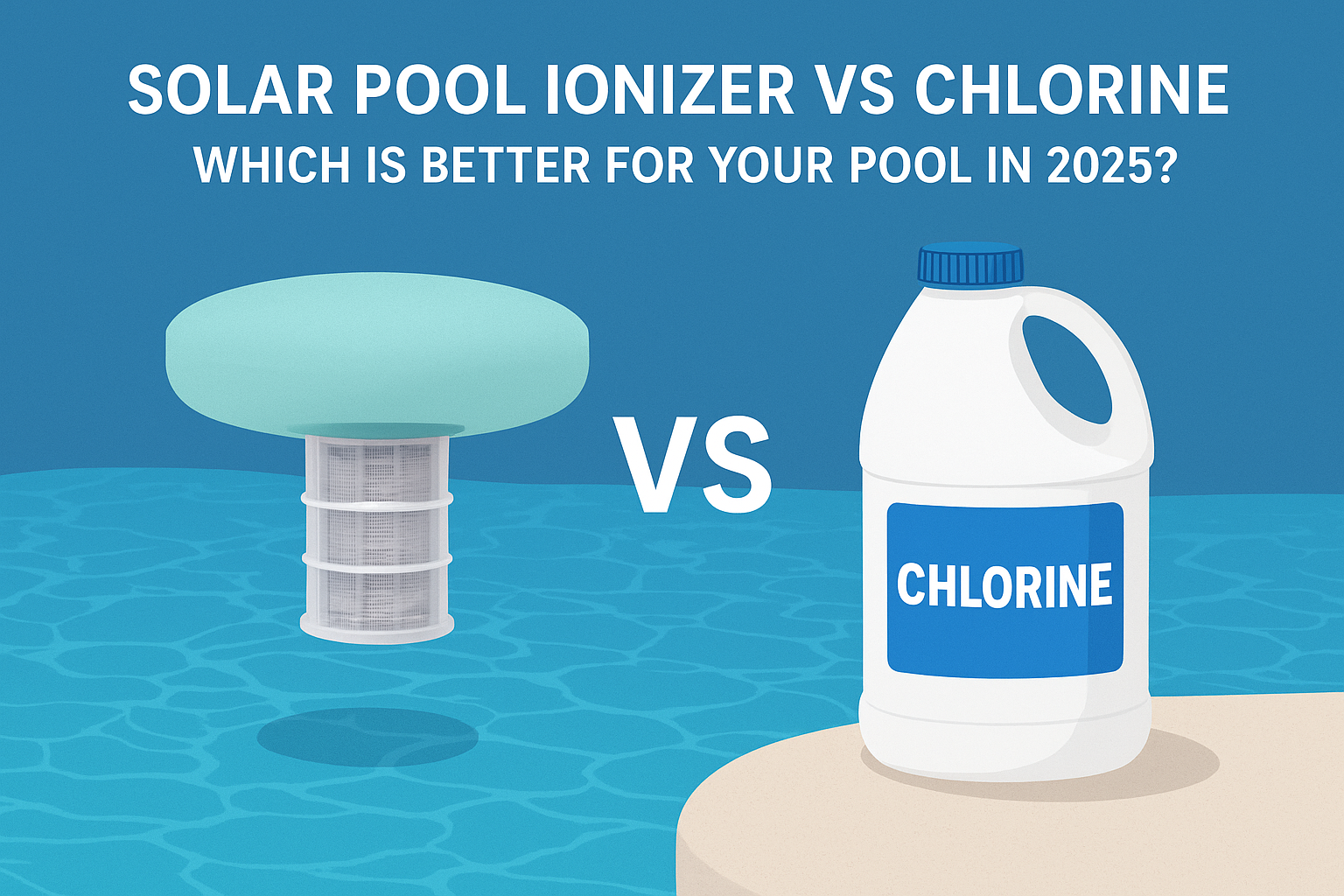
Maintaining a clean and healthy swimming pool has traditionally relied on chlorine—a powerful but sometimes harsh chemical. However, as sustainability and health concerns have become more important to homeowners and commercial facilities, solar pool ionizers have emerged as a popular alternative.
This guide compares solar ionization and chlorine treatment in 2025, helping distributors, wholesalers, and pool owners understand which solution offers better value, safety, and long-term performance.
What Is a Solar Pool Ionizer?
A solar pool ionizer uses sunlight to generate a low-voltage electric current that releases copper ions into the water. These ions inhibit algae growth, reduce chlorine demand, and maintain water clarity with fewer chemicals.
Key advantages include:
- Eco-friendly water treatment
- Reduced chlorine usage (often 60–90%)
- Lower maintenance workload
- Long-term cost savings
What Does Chlorine Do?
Chlorine is a chemical sanitizer that oxidizes contaminants, kills bacteria, and breaks down organic materials in pool water. It remains the standard method used by most pool owners and commercial facilities.
However, chlorine comes with drawbacks:
- Strong odor and skin irritation
- Continuous consumption (requires frequent replenishment)
- Rapid degradation under sunlight
- Storage and handling concerns
How a Solar Pool Ionizer Works (Step-by-Step)
Step 1 — Solar Panel Activation
The unit’s solar panel converts sunlight into electrical energy.
Step 2 — Low-Voltage Current Flow
The energy powers two electrodes submerged in the water.
Step 3 — Copper Ion Release
The primary electrode is made of high-purity purple copper, which releases copper ions at a controlled rate.
Step 4 — Algae Inhibition
Copper ions disrupt algae cell function, preventing growth and reproduction.
Step 5 — Cleaner, Clearer Water
With algae suppressed, chlorine usage is greatly reduced, and overall maintenance becomes easier.
Typical electrode lifespan: around one year depending on usage and water quality.
Our electrodes comply with RoHS and CE certification standards.

Performance Comparison: Solar Ionizer vs. Chlorine
| Feature | Solar Pool Ionizer | Chlorine |
|---|---|---|
| Algae Control | Excellent; copper ions prevent growth | Effective but requires higher doses |
| Chemical Usage | Reduces chlorine by 60–90% | High, requires regular additions |
| Skin & Eye Comfort | Gentle, no irritation | May cause dryness, irritation |
| Maintenance Cost | Low annual cost | Higher ongoing chemical expenses |
| Eco-Friendliness | Uses solar power; sustainable | Chemical-based; less eco-friendly |
| Water Odor | Odor-free | Chlorine smell is common |
| Long-Term Stability | Very stable in sunlight | Degrades quickly under sunlight |
Why Solar Ionizers Are Becoming More Popular in 2025
Compared with traditional chlorine-only systems, solar ionizers offer significant advantages in today’s market:
Lower Chemical Dependence
Consumers increasingly prefer low-chemical or chemical-free lifestyles.
Rising Cost of Chlorine
Global supply fluctuations have increased chlorine prices—making alternatives more attractive.
Eco-Friendly Trend
Energy-efficient, solar-powered devices align with environmental priorities.
Improved Technology
Modern ionizers deliver better build quality, stronger output, and more stable ion concentrations.
Why Customers Choose Our Solar Pool Ionizer
Compared with competitors on the market, our model offers:
High-Purity Purple Copper Electrode
Provides efficient, consistent ionization and a longer one-year lifespan.
Superior Craftsmanship
Durable construction and stable performance for residential and commercial pools.
Certified for Safety
Complies with RoHS and CE, suitable for global distribution.
Customization for Bulk Buyers (MOQ required)
- Custom colors
- Private labeling
- Packaging design
- OEM/ODM support
Ideal for worldwide distributors looking to differentiate their product line.
Final Verdict: Which Is Better in 2025?
The best solution is a combination of both.
A solar pool ionizer handles algae control naturally and significantly reduces chlorine consumption. Chlorine remains essential for disinfection, but far less is required.
For 2025, the most effective and economical pool treatment method is:
Solar Pool Ionizer + Low-Level Chlorine Maintenance.
This hybrid approach keeps water clean, comfortable, and cost-efficient—without overreliance on chemicals.

